Different Cockpits, Same Cognitive Failure Point: Comparing Cognitive Overload Differences Between F-35, Apache and F-16

New here? Subscribe to our blog to receive our latest insights directly in your inbox.

Three military aircrafts. Three fundamentally different cockpit environments. And yet: the same point of cognitive failure. Here's how each platform pushes its pilot to the breaking point by a different route. Understanding the mechanisms is the first step toward solving the problem.
Modern military aviation has produced some of the most sophisticated machines ever built.
The F-35 fuses sensor data from six cameras simultaneously. The Apache's thermal night vision is directly linked to the pilot's gaze. The F-16 offers raw, unmediated aerodynamic performance. Each platform represents decades of engineering progress, and yet, across all three, pilots arrive at the same dangerous destination: cognitive overload, with no processing bandwidth left to process a critical warning.
Our latest whitepaper, Pilot Awareness: The Case for Tactile Communication in Military Aviation, examines this convergence in detail.
To learn more about this topic, explore our Full Whitepaper!
What follows draws directly from its platform-specific analysis: a comparison that reveals why no single cockpit fix can solve a fundamentally human problem.

The Anatomy of the Bottleneck
Current pilot support systems and cockpits are a sensory firehose. Relying almost exclusively on vision and hearing, they induce cognitive overload and lead to situational awareness collapses.
Research into Multiple Resource Theory tells us that these channels have a finite bandwidth.
When one or more channels compete for the same sensory pathways, adding another visual alert does not help, it competes for the same neural resources, leading to attentional tunnelling.We explored this topic in detail in our earlier Blog Post
Despite the same underlying cognitive collapse, the way it manifests depends on the platform a pilot is operating.
By examining the “bottleneck taxonomy” across three representative aircrafts — the F-35 Lightning II, AH-64 Apache, and F-16 Fighting Falcon — a clear pattern emerges.
Each system creates a different pressure point on the human operator, revealing why a one-size-fits-all visual or auditory solution is no longer viable.
F-35 LIGHTNING II
When Automation Becomes a Liability
The F-35 is, by design intent, the most automated tactical aircraft currently in service.

Its Sensor Fusion Engine integrates radar, infrared, electronic warfare, and datalink feeds into a single tactical picture.
The aircraft autonomously manages fuel transfer, weapon sequencing, and threat prioritisation.
The goal is to free the pilot for higher-order mission thinking.
The unintended consequence, however, is dangerous.
By enhancing automation, the F-35 converts its pilot from active controller to passive monitor. And humans are notoriously poor passive monitors.
Research shows that monitoring performance degrades significantly after as little as 20 minutes of sustained vigilance, and that operators become increasingly prone to overreliance and missed failures over time.
KEY FINDING FROM THE WHITEPAPER When airline pilots encountered an unexpected aerodynamic stall, adherence to trained recovery criteria decreased by 20–30% across most measures, and by 50% for the critical first control input, compared to anticipated conditions. In the military fast-jet environment, where automation complexity and operational tempo are considerably greater, the effect is expected to be more severe.
When the automation encounters an “edge case” or partial failure, the pilot experiences a “surprise effect”, in which they have to spend seconds re-orienting to the aircraft's state — time that simply does not exist in high-tempo combat.
As programmes like Collaborative Combat Aircraft move toward a single crewed jet directing multiple autonomous wingmen, this monitoring burden will only grow.
AH-64 APACHE
Operating at the Limits of Human Capacity
Where the F-35 risks pilot disengagement, the Apache represents the opposite: maximum engagement, at all times, until cognitive ability breaks.

Rotary-Wing Operations
Rotary-wing operations — nap-of-the-earth flight at ultra-low altitude, ship-deck landings, operations in Degraded Visual Environments (DVE) caused by dust, sand, snow, or smoke — demand continuous, high-bandwidth manual control.
Brownout Landing
During a brownout landing, the Apache pilot must simultaneously maintain flight-path control, navigate obstacles with near-zero visibility, read symbology projected through their helmet display (IHADSS: Integrated Helmet and Display Sighting System), and coordinate with a copilot/gunner.
The IHADSS itself, for all its sophistication, presents a monocular image to one eye only, which strips away depth perception at precisely the moment the pilot needs it most.
Acoustic Environment
The acoustic environment compounds this.
In-cabin noise levels can reach 102 dB in the UH-60 Black Hawk, representative of military rotary-wing cockpits.
Under those conditions, research has shown that 3D spatial audio localization accuracy collapses to just 53.1%, compared to 75% in quiet conditions.
Audio warnings, the primary alert channel, arrive in an environment that has already destroyed their effectiveness.
The Apache pilot is not disengaged.
They are maximally engaged, and for that very reason, cognitively saturated. Additional warnings , visual or auditory, arrive in a system with no remaining processing capacity to receive them.
F-16C/D FIGHTING FALCON
When Physical Stress Amplifies Cognitive Demand
The F-16 occupies the middle ground of the automation spectrum.
Its fly-by-wire controls require continuous manual input, with significantly less flight-control automation assistance than fifth-generation platforms. The pilot is continuously and actively in the loop, but that loop is extraordinarily demanding.
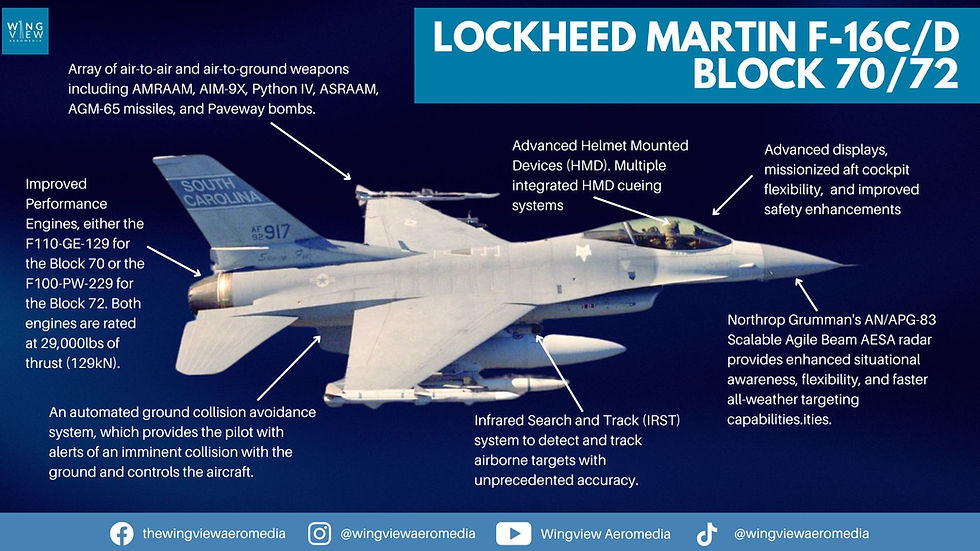
During an engagement, the F-16C Fighting Falcon pilot must withstand repeated high-G loads of 7–9G while hand-flying the aircraft, managing radar, directing weapons, and maintaining awareness of the three-dimensional geometry of the fight, all without automation to offload these tasks.
Crucially, the physical demands of high-G flight do not simply occur alongside the cognitive load: they intensify it.
The muscular effort of breathing against G-suit inflation and chest compression, restricted head movement, and the persistent risk of G-induced loss of consciousness (G-LOC) each adds directly to the pilot’s cognitive burden.
The result is a form of combined physical and cognitive overload distinct from both the F-35's data-saturated passivity and the Apache's environmental saturation.
THE BROADER PATTERN The same bottleneck taxonomy extends across the broader fleet. The Eurofighter Typhoon maintains a high manual workload profile despite its advanced flight management systems, while the CH-47 Chinook encounters the same degraded visual environment (DVE) exposure challenges faced by the AH-64 Apache. The constraint is structural to the human operator, not incidental to any single airframe.
The Case for a Platform-Independent Solution
The significance of setting these three platforms side by side is that it closes the door on platform-specific solutions.
A warning system designed to pull the F-35 pilot back into the loop would be actively counterproductive in the Apache, where the pilot is already saturated. Louder alerts in the F-16 cockpit simply add to a system already past its limit.Any effective cross-platform situational awareness aid must operate on a channel that is independent of the primary workload drivers: one that neither competes with visual processing nor adds to auditory clutter.
That requirement points, consistently, toward the tactile channel: the one sensory pathway that is not already carrying the weight of flight.
This builds on insights from our previous blog post on Tactile Communication
The cognitive bottleneck is not a design flaw in any one aircraft. It is a structural feature of putting a human brain into a 21st-century combat environment.
Solving it requires meeting the brain on its own terms.
That is the mission at Touchwaves.


Comments